
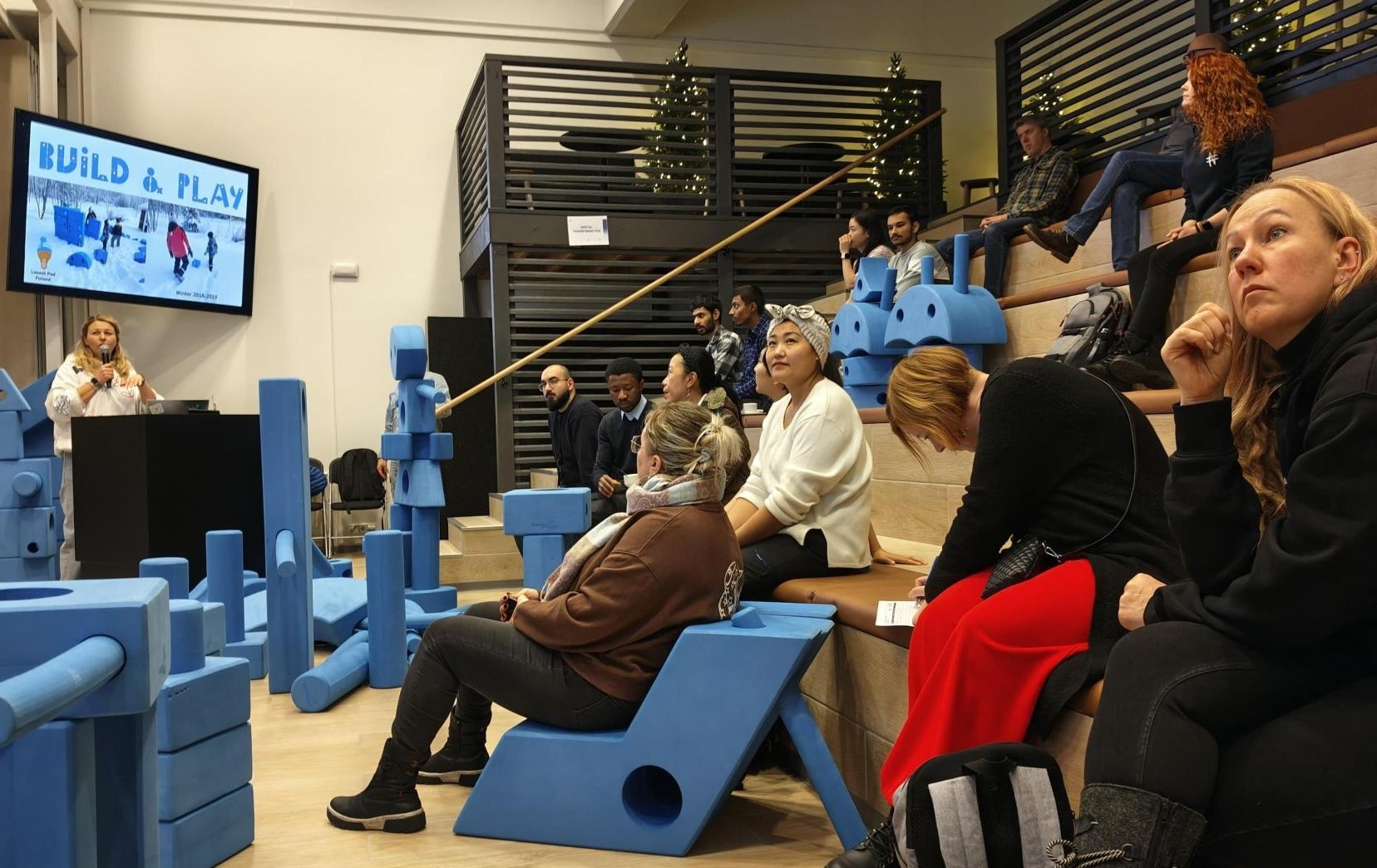
Kainuu needs international talents. At the same time, international talents face difficulties in finding employment and connections from the region. Many people and projects work daily to solve this problem but there is no secret recipe and the results are not immediately visible. It takes a long-term joint effort with a shared will, solid coordination and enough resources. Read the article by Mrs Tatiana Petrova from the OKKO project, addressing the possible solutions.
The situation of International Talents is Challenging
In Kainuu, there is a lot of talk about how international talents are a key resource for the future. The population is shrinking and ageing, especially in small municipalities, and at the same time Kajaani University of Applied Sciences already has almost 600 international students, with plans to increase this number further. Yet most of their stories end with the same result: often in their second year of study, or at the latest after graduation, they move away from Kainuu – even if they would like to stay. The importance of international talents is widely recognized, but in everyday life it is still surprisingly difficult for them to put down roots here.
Many international students’ stories in Kainuu start well. Their studies go smoothly, Kainuu feels safe, and a life close to nature wins their hearts. The challenges usually begin at the point where they need to find an internship or their first job. Finnish language quickly becomes a barrier. At work, you are expected to speak Finnish well, but in daily life there are not always enough opportunities to practice the language. At the same time, studies in a foreign language, usually English, require a lot of effort.
Many international students live in their own “bubbles” and do not have Finnish-speaking acquaintances or friends, even if they wanted to. Integration is always a two-way process: the other participants are the local residents, who are not always ready or confident enough to include international students in their everyday lives.
As it comes to employment, for many international students, finding a job is not easy and it often is down to a lucky coincidence. Most students end up looking for work elsewhere in Finland. For students with families, their partner’s employment situation and the smoothness of everyday life can ultimately be the deciding factors: if there is no work and social networks remain thin, the decision to leave becomes easier.
From the companies’ perspective, the situation is also contradictory. The business structure in Kainuu consists mainly of micro-enterprises that are interested in international recruitment but often lack practical skills and time resources. Recruiting Finnish employees is often difficult enough, and there might be negative experiences of unsuccessful recruitment affecting operations.
New Approaches Needed
Unfortunately, international talents are still often seen as “difficult cases”. Their orientation requires more resources , and since there is no common language and there are cultural differences, as well, they are not always fully trusted. Still, hiring the first foreign employee is usually a critical turning point for a company, after that, international talents are more often seen as an opportunity than a burden. Support for recruiting international talents is also available when needed, for example through the Business Kainuu network.
At the moment the situation in Kainuu is frustrating. We educate international talents, but far too many of them eventually pack their bags and move elsewhere because they cannot find jobs in Kainuu that match their qualifications. The all too well familiar discussions about labour market mismatch, industrial structure, educational programmes that do not always meet the needs of working life, as well as employers’ readiness to hire foreigners, their English skills, and international employees’ Finnish language and working life skills continue.
The OKKO project carried out by KAMK from September 2024 to December 2025 has address these problems. The project has listened to international students’ own experiences as well as the observations of local actors, experts and companies in Kainuu, and has carried out an extensive study on the challenges international students face in finding employment in Kainuu.
A Pathway for International Students
As a result of the OKKO project, the International Student Pathway has been mapped out: everything that should happen from the moment a student first hears about Kainuu to the point where they feel they are a local in the region. This pathway has been published as an article in Kajaani University of Applied Sciences’ RDI series.
The project has also led to the creation of, among other things, an association run by international talents themselves, International Voices of Kainuu ry. The association aims to strengthen the position of international students and support their integration and employment in Kainuu.
The importance of international talents is known and acknowledged, but the journey from good strategies to everyday practice is still incomplete. Many of the solutions in Kainuu rely on project-based funding, and a common interest and will between different actors is not always found. Although a lot of important work has already been done in Kainuu, and many people work on these same issues every single day, results are not immediately visible. There is no secret recipe for integrating international talents to a region. It is a long-term joint effort that requires a shared will, solid coordination and enough resources.
Great Hopes for Regional Cooperation
This is where the upcoming regional programme has a crucial role. The programme draft addresses the same issues that international students and local stakeholders themselves keep raising to discussions: the need for permanent coordination on international talent issues, ensuring a better match between education and labour market needs, strengthening language and employment support, and helping companies with their first international recruitments. Building a sense of belonging is equally important – not only in educational institutions, but throughout the region.
In the draft of the Kainuu regional programme (2025), the role of international labour and students in safeguarding the region’s vitality is strongly emphasized. In the text it is directly stated that ethical and responsible international recruitment and labour migration to Kainuu will be increased. Also increasing the number of international students and strengthening their sustainable integration into working life and communities is equally part of the programme measures. A possibility to prepare and implement an international talent retention strategy for the region is also mentioned in the text.
If the measures outlined in the upcoming regional programme are properly resourced, scheduled and implemented together, the story of the next generation of international talents can very well be different from the one described above. In that case, an international students and talents and their family would not be just temporary visitors in Kainuu, but future colleagues, entrepreneurs, neighbors and hopefully also active members of rural and village associations. The new regional programme provides a strong framework for achieving this kind of goal. If implemented boldly, the programme will give Kainuu a real chance to make use of the international talent potential that is now slipping away.
Tatiana Petrova
Project manager
OKKO project